
A Night at Turtleback Falls and Rainbow Falls
by Kevin Adams on Mar 2, 2026
!
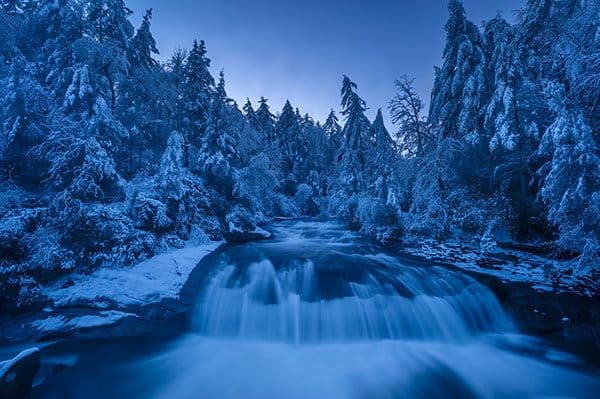
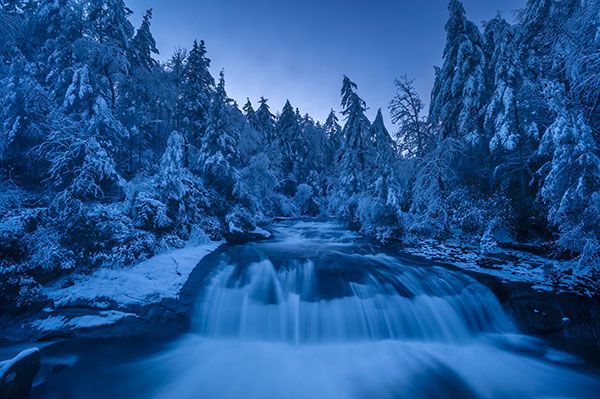
You don’t really know a waterfall until you’ve spent the night with it.Kevin Adams
I like spending the night at waterfalls. It’s the best way to capture the best photos possible with the least amount of time expended. In one half-day trip, I can get in evening golden hour, sunset, evening blue hour, all night, morning blue hour, sunrise, and morning golden hour. Granted, not all these periods work well all the time, but the potential is always there.
I’ve done this many times, and when the conditions don’t cooperate, I’m still thankful for having the experience. As far as logistics go, I typically pack a sleeping bag and pad and simply sleep on the ground in between shots, without a tent and without fusing with camp stove and all that crap. It’s just one night, so I can get by fine with water and an energy bar or two.
Back in 2010, I spent the night at Turtleback Falls and Rainbow Falls in Pisgah National Forest. The two waterfalls are very close together. I started shooting at about 3 p.m. January 31 and ending on February 1 around 8:00 a.m. I chose this night because it was during the full moon and I was hoping to capture the moonbow at Rainbow Falls. The snow was a bonus. Here are the images I made during this period that I close to process.
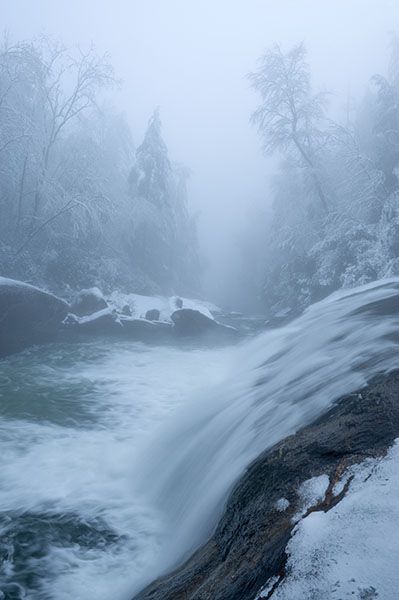
(060B-54278)
3:11 p.m. Dense fog made the light levels low and gave all my images a dreary look. Nikon D700, Nikon 24-70mm f/2.8 lens at 26mm, f/22, 1/8 sec, ISO 100.
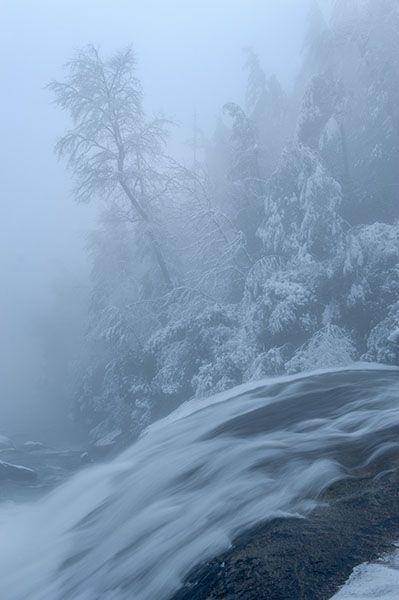
(060B-54286V2)
3:14 p.m. Nikon D700, Nikon 24-70mm f/2.8 lens at 40mm, f/22, 1/6 sec, ISO 100.
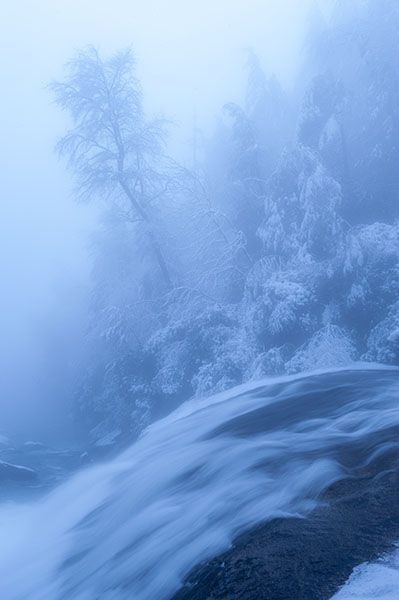
(060B-54286)
3:14 p.m. Settings the same as the previous photo. I processed it differently to give it a cooler look.
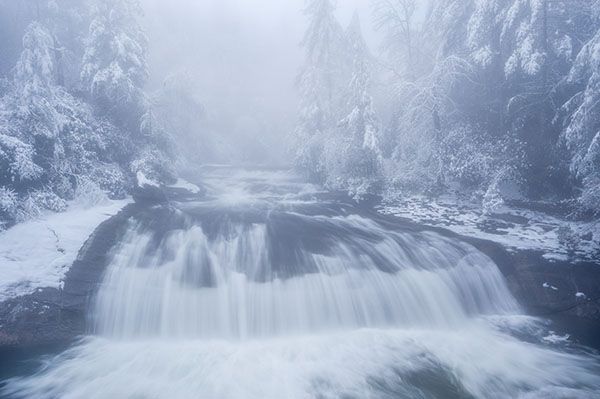
(060B-54294)
3:33 p.m. Nikon D700, Nikon 17-35mm f/2.8 lens at 24mm, f/22, 0.3 sec, ISO 100.
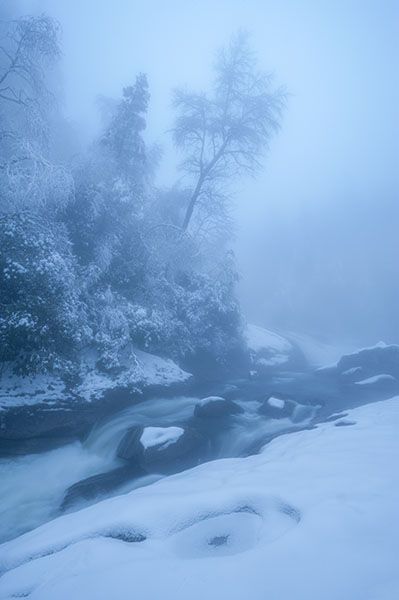
(060B-54311)
3:59 p.m. This is the view from below the waterfall looking up to it. Nikon D700, Nikon 17-35mm f/2.8 lens at 19mm, f/22, 0.4 sec, ISO 100.
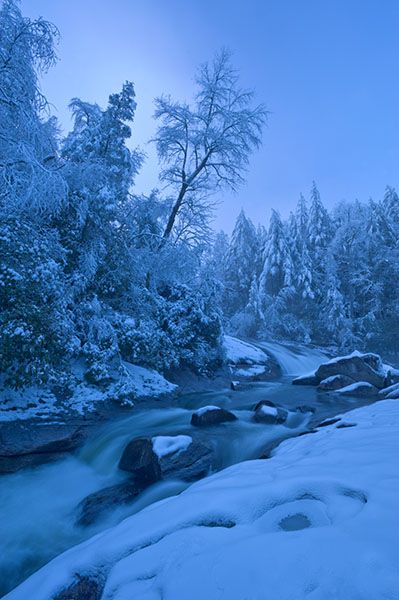
(060B-54325)
5:19 p.m. Late in the winter day, the light gets cooler. Nikon D700, Nikon 17-35mm f/2.8 lens at 19mm, f/22, 1.0 sec, ISO 100.
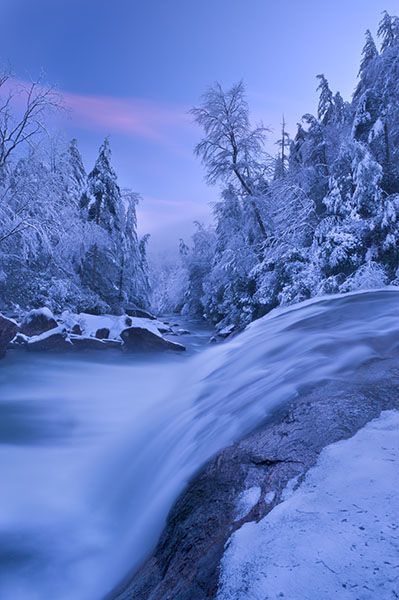
(060B-54350)
6:10 p.m. Dusk twilight is starting. Nikon D700, Nikon 17-35mm f/2.8 lens at 17mm, f/14, 13.0 sec, ISO 200.
(060B-54352)
6:19 p.m. It’s starting to get dark. Nikon D700, Nikon 17-35mm f/2.8 lens at 25mm, f/22, 20.0 sec, ISO 200.
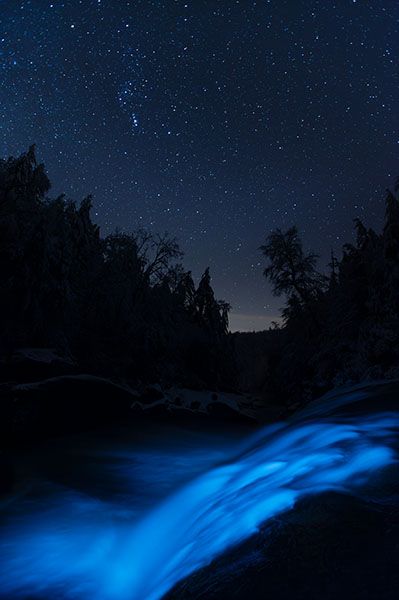
(060B-54357)
7:51 p.m. Full darkness has set in. I made a single exposure and light painted the waterfall with a flashlight and blue gel filter during the exposure. This was several years ago. Today, I would shoot the sky and foreground on separate exposures. Also, my base exposure today for the night sky is f/2.8, 13.0 sec, ISO 6400. Nikon D700, Nikon 17-35mm f/2.8 lens at 17mm, f/4, 25.0 sec, ISO 1600.
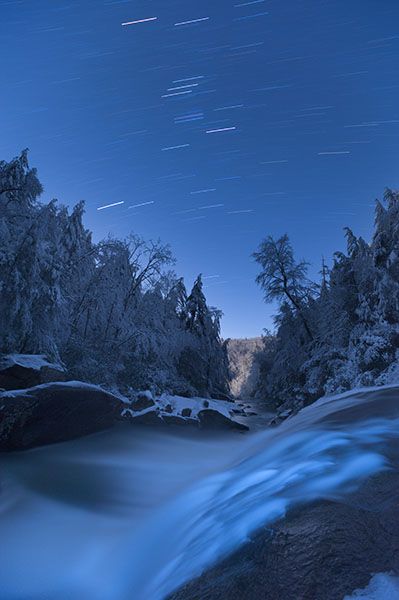
(060B-54372M4)
8:22 p.m. This is the time for one of the four, 5-minute exposures. I had hoped to shoot more exposures so the trails would be longer, but the full moon had other plans for me and moved into the scene sooner than I wanted. Nikon D700, Nikon 17-35mm f/2.8 lens at 17mm, f/4, 5 min, ISO 200.
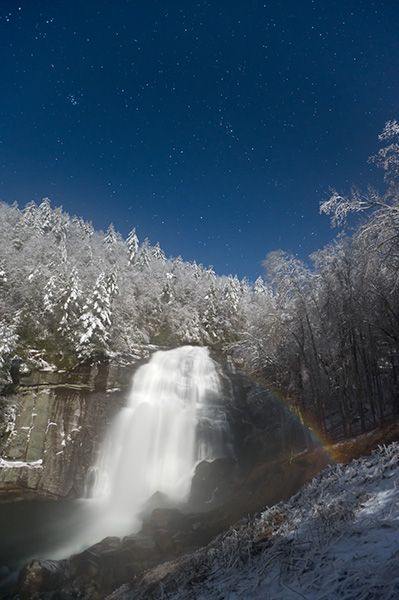
(060C-54378)
10:46 p.m. The full moon has now risen high enough to be in position to shoot the moonbow at Rainbow Falls. See this blog post for more about shooting the moonbow. Nikon D700, Nikon 17-35mm f/2.8 lens at 17mm, f/4, 20.0 sec, ISO 1600.
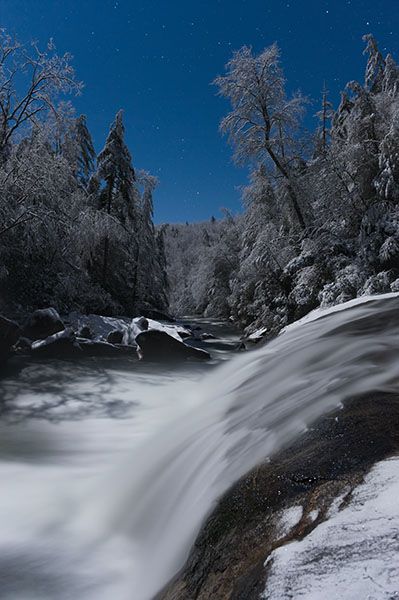
(060B-54397)
12:40 a.m. I hike back to Turtleback Falls and photograph it under the light of the full moon. Nikon D700, Nikon 24-70mm f/2.8 lens at 29mm, f/4, 15.0 sec, ISO 1000.
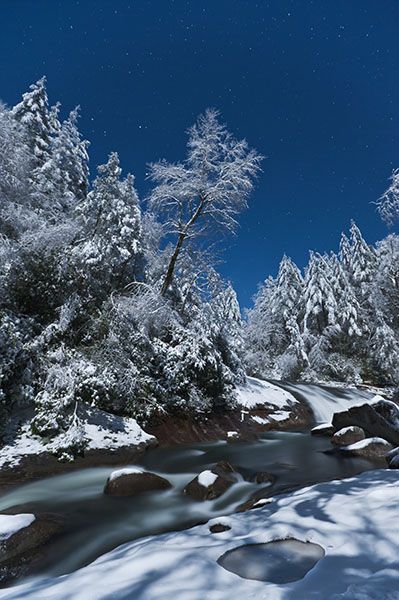
(060B-54409)
1:18 a.m. After making the previous photo, I moved around to the other side of Turtleback Falls. Nikon D700, Nikon 17-35mm lens at 17mm, f/4, 20.0 sec, ISO 1600.
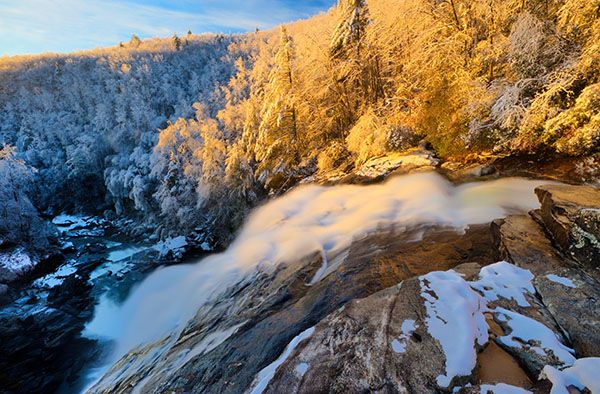
(060C-54457M5)
7:47 a.m. The rising sun illuminates the top of Rainbow Falls. The contrast was extreme, so I had to shoot five bracketed exposures and blend them using HDR software. D700, Nikon 17-35mm lens at 17mm, f/22, bracketed shutter speeds, ISO 200.