
Photographers 1800s & 1900s
!
Waterfalls have lured artists, poets, musicians, and writers throughout recorded history. I’ve no doubt that somewhere there are prehistoric cave drawings depicting waterfalls. A worthy effort, I believe, would be a book about how waterfalls throughout the world have inspired creative minds, but I can offer only this meager beginning of a few examples that apply to North Carolina waterfalls. Although a comprehensive worldwide treatment of this subject is not available, I should mention Brian J. Hudson’s Waterfall, hich includes a nice chapter on the subject.72 I highly recommend the book to anyone who loves waterfalls. Also, be sure to read the Art, Literature, Poetry, and Music pages of this website.
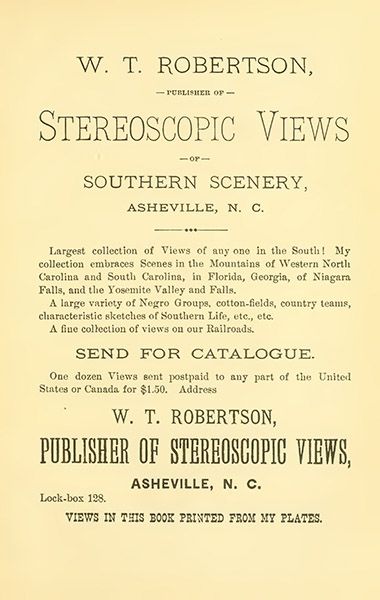
This photographer's advertisement appeared in Descriptive Illustrated Guide-Book to North Carolina Mountains, published in 1881.
As a photographer and North Carolina waterfall historian, I’m particularly attracted to the work of early waterfall photographers. Besides the enjoyment of just admiring their photos, there’s a lot of historical insight to be gained from their work.
The plan at first was to limit this page to the earliest photographers, those of the 1800s and early 1900s, but as I got into it, I couldn’t decide exactly where to cut it off. The decision to Include the entire 20th century created the dilemma of deciding which of the more modern photographers to include. Nature photography exploded in the latter part of the century, with countless people training their cameras to the outdoors—waterfalls being a coveted focus. The 1980s and 1990s produced several coffee table photo books covering North Carolina, in which waterfalls were a common subject.
I couldn’t possibly include all these photographers, even if I knew all of them. So, I’ve decided to include only those modern photographers who work(ed) primarily in the waterfall arena. And I’ll leave it to a future waterfall geek to tackle a list of 21st century North Carolina waterfall photographers.
Shoutout to Stephen E. Massengill for compiling the monumental work Photographers in North Carolina, The First Century, 1842 – 1941.76 I knew the names and work of most of the photographers included here, but Massengill’s book filled in the details.
In my research of historical waterfall photographers and images, I’ve come across several mysteries. I’ll likely never solve most of them simply because they are one-offs and there isn’t enough information available to nail it down, and also because I don’t have unlimited time to do the research. I haven’t included any of these instances on this page, but there is one case where I have enough info to get close but not enough to state anything with certainty. See “Photographer’s Puzzle” at the bottom of the page and maybe you can help me solve it.
Have I missed someone who should be on the list?
Adams, Kevin (1961 –)
I guess I should include myself. After all, I’ve devoted most of my life to exploring and photographing waterfalls. I began my photography career in the mid-1980s and published the first edition of North Carolina Waterfalls in 1994, followed by the second edition in 2005 and the third in 2016. Obviously, I’m still kicking and if I can ever get this website in the shape I want it to be, I plan to shift attention to warmer climes and finish my work on waterfalls of the Caribbean.
Baker, Arthur Farrington (1857–1936)
A native of England, Baker opened a studio in Hendersonville in 1884 and partnered with Benjamin John Barber, and later with Armitage Farrington Barber, Benjamin’s son.60 Baker photographed throughout the Hendersonville region, including capturing many waterfall scenes. He is well known for his stereophotography, with waterfalls often being the subjects of the stereographs. The Baker-Barber Collection of Henderson County Public Library holds many of Baker’s photos.
Armitage Farrington Barber had two sons who joined in the business, Donald M. Barber and Joseph E. (“Jody”) Barber.60 I don’t know how much either member of the Barber family photographed in the region or if they made images of waterfalls.
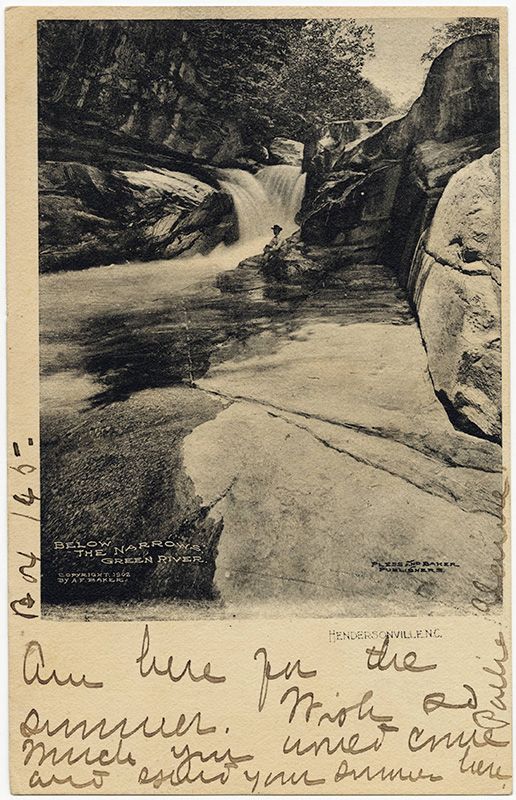
Postcard of Gorilla Falls in Green River Narrows, photographed by Arthur Farrington Baker. (002C2-01)
Ball, Ewart McKinley (1854/5 – 1937)
The Ball name is well known in western North Carolina. Ball photographed in the western North Carolina region 1919–1937. He purchased Plateau Studios from George Masa in the mid-1920s.61 His photos are housed in the E.M. Ball Photographic Collection at Ramsey Library, UNC Asheville. Ewart Ball, Jr. and his brother, Ervin, opened Ball Photo in 1956, an Asheville institution still going strong.80
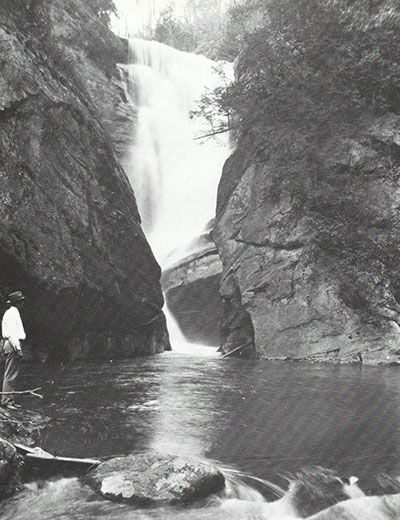
Wolf Creek Falls photographed by Ewart Ball. (105A-01)
Barnhill, William A. (1889 – 1987)
Barnhill is known for beautifully composed images depicting the cultural history of the Asheville region. His photos, made 1914–1917 and 1920–1922, provide a candid, unposed portrait of mountain life during this period. Barnhill also photographed landscape scenes and waterfalls in the Asheville, Mountain Mitchell, and Hickory Nut Gorge areas.
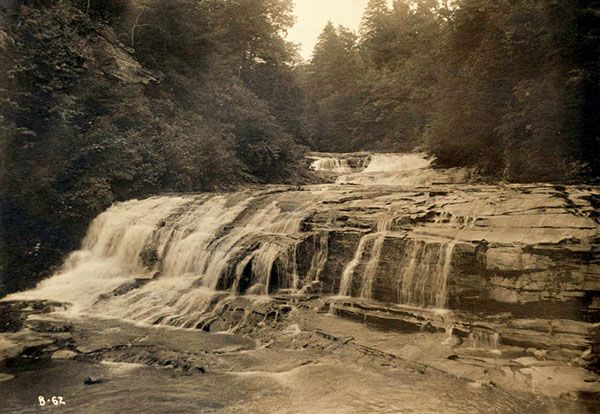
Broad River Falls photo by William A. Barnhill. (057O-01)
Bicknell, Frank Wade (1866 – 1933)
Bicknell, and his wife, Jessie, photographed in the Linville Gorge region beginning in 1908. His photography of Linville Falls and other waterfalls in the Linville Gorge region is a valuable contribution to the historical record.
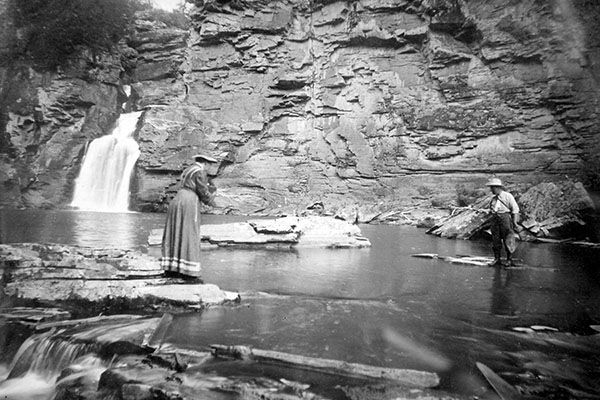
Linville Falls photo by Frank wade Bicknell, ca. 1911. (064A-02)
Boyd, Brian (1958 – )
Boyd began photographing seriously in the mid-1980s and published the first edition of his popular guidebook Waterfalls of the Southern Appalachians in 1990.

The fifth edition of Brian Boyd's book on waterfalls of the Southern Appalachians, featuring Georgia's Minnehaha Falls on the cover.
Broadaway, John S.
See “Photographer’s Puzzle” at bottom of page.
Brown, Edward Elmer (ca. 1858 – 1934)
Active in the Asheville region in the late 1800s, Brown’s photos appear in publications of the time, along with his partner, Thomas H. Lindsay.
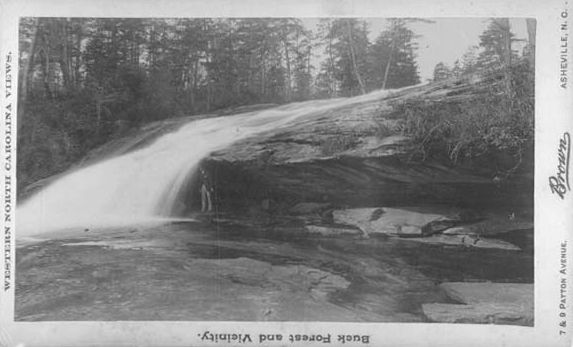
Bridal Veil Falls in DuPont State Recreational Forest. Photo by Edward Elmer Brown, ca. late 1800s. (030D-02)
Cline, Walter M. (1914 – 1984)
Cline is well known for publishing real-photo postcards of western North Carolina and eastern Tennessee, among several other states.63
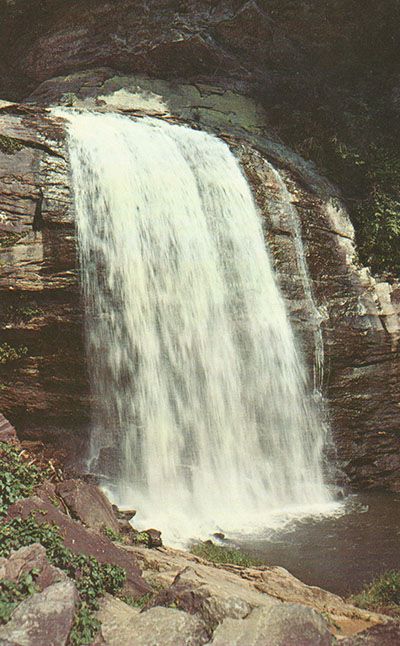
Looking Glass Falls is featured on this postcard published by W. M. Cline Co. in 1959. (065A-07
DePew, E. Douglas (Unknown)
I’ve been unable to find very much information about DePew, but will continue searching. So far, all I know is that he partnered with Jim Bob Tinsley on a 1954 booklet titled Land of waterfalls, A Portfolio of Exclusive Lithographs Suitable For Framing (see Guidebooks) and that a photo of Boren Mill Shoals he took with Tinsley made the cover of The State. The booklet was published by DePew Photopublicity Asheville, so we can assume he operated a photo business in the city.
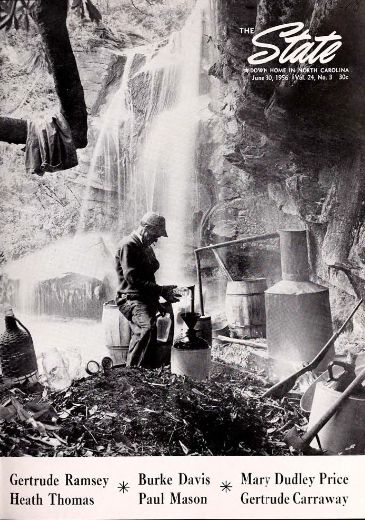
Boren Mill Shoals photo on the cover of The State, June 30, 1956. E.Douglas DePew partnered with Jim Bob Tinsley to make this photo. (098H-01)
Jackson, William Henry (1843 – 1942)
Jackson needs no introduction to historical photography buffs, especially those focusing on the Wild West. His photographs of the Yellowstone region, made among his many frontier excursions, were significant in convincing Congress to create Yellowstone National Park in 1872, the first national park in the U.S. (See George Masa, for a similar theme regarding Great Smoky Mountains National Park.)
In 1902, during his last active year as a landscape photographer, Jackson spent two months in western North Carolina photographing various scenes in Asheville, Hot Springs, Chimney Rock, and the Sapphire region. R. Henry Scadin accompanied him on waterfall excursions over a four-day period, no doubt acting as guide as much as fellow photographer. Jackson’s original work is housed in the Library of Congress. Asheville’s Pack Library holds fifteen loose and seven framed prints of Jackson’s western North Carolina images.64,65
Scadin kept a diary that is held at UNC Asheville’s Ramsey Library. Following are his entries for his time spent with Jackson.70
Tuesday, June 3. I was sent for this morning and when I got to Sapphire I found that Mr. Jackson, the most noted view photographer of America, was there and I had the pleasure of going with him to make some views. It has been a fine day.
Wednesday, June 4. Went to the Narrows early this morning where I met Mr. Jackson and then we went to the Horse Pasture Falls. I came home at noon and he went up on Mt. Toxaway.
Thursday, June 5. Mr. Jackson came over and took breakfast with us this morning, then we went to the Whitewater Falls. The water was too low for a good photo of the falls, but he made some exposure. When we came back we went up on Rainy Knob for a view of Mt. Toxaway. I went to Sapphire tonight.
Friday, June 6. Was with Mr. Jackson this forenoon going over Bald Rock on foot. I said good-bye to him and came home at noon. He leaves tomorrow morning. It threatened rain but did not get to business. We have strawberries every meal.
William Henry Jackson Photos
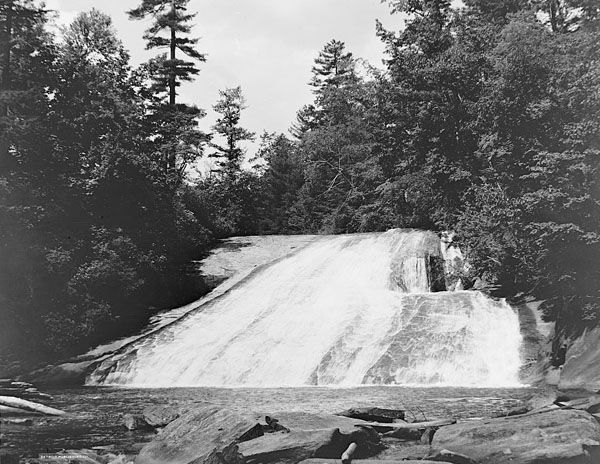
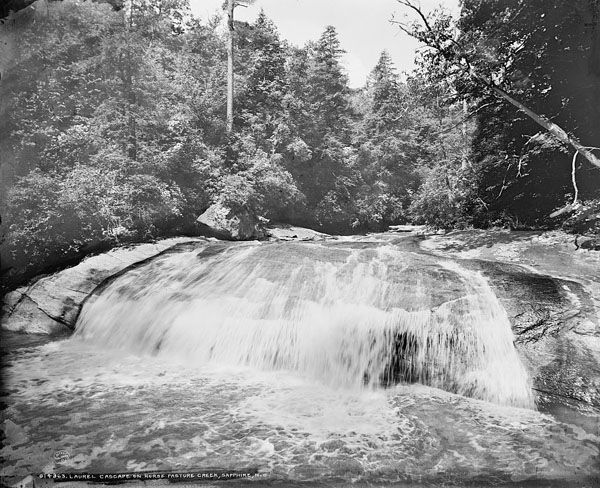
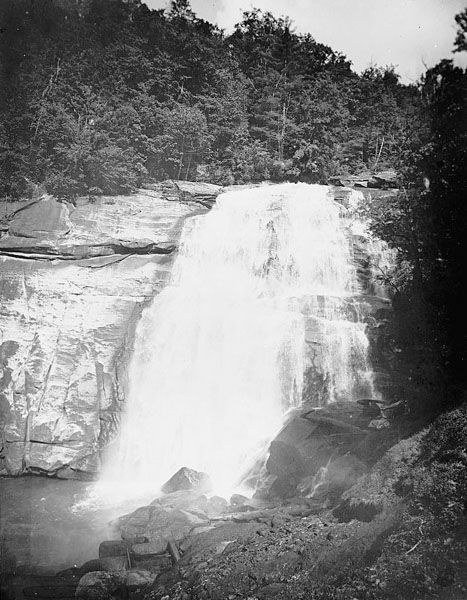
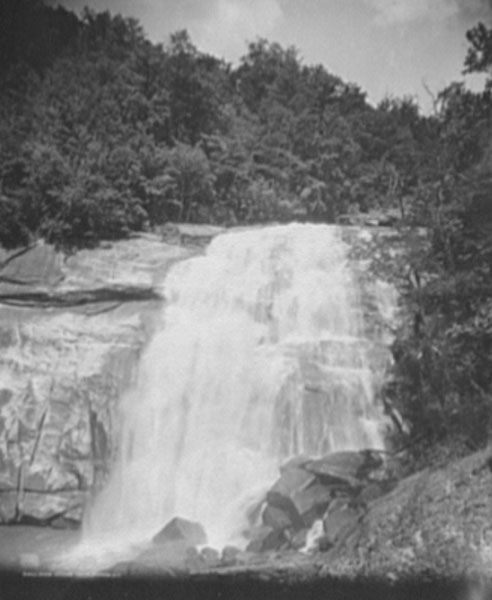
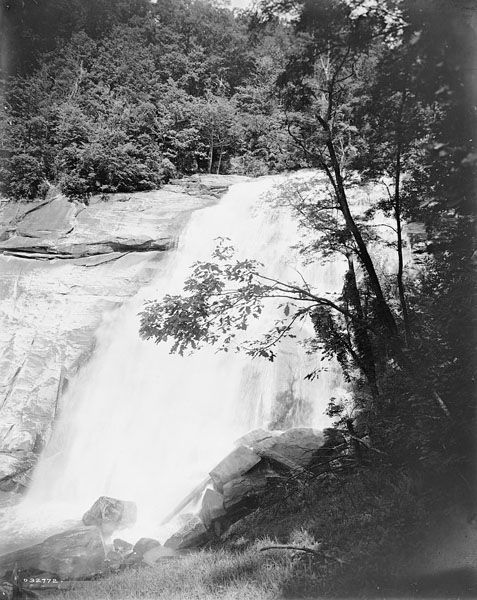
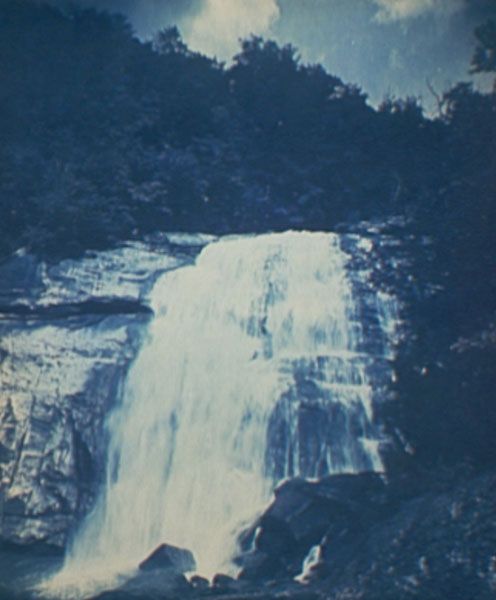
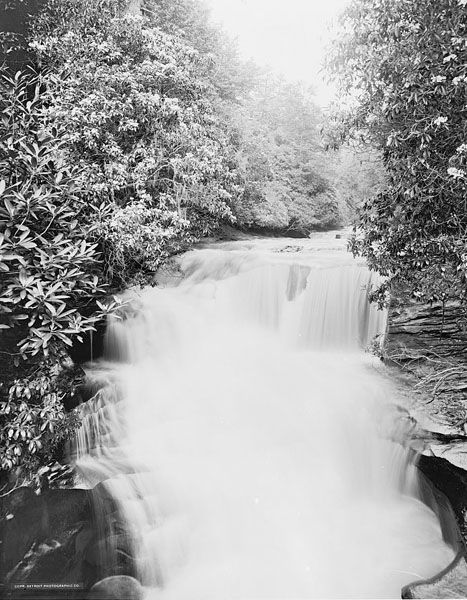
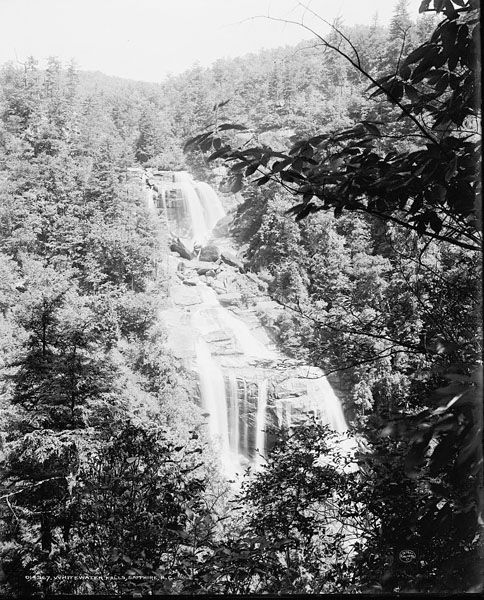
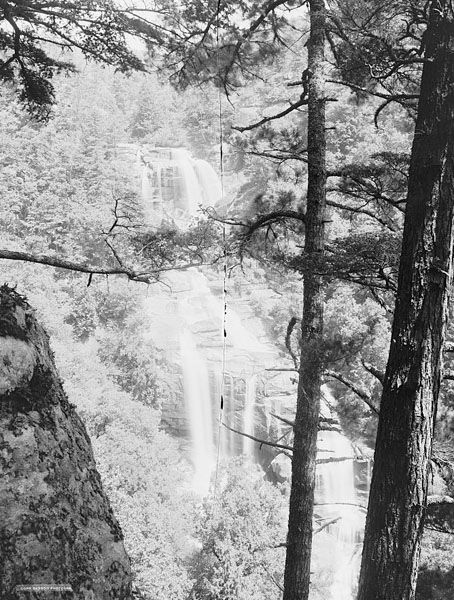
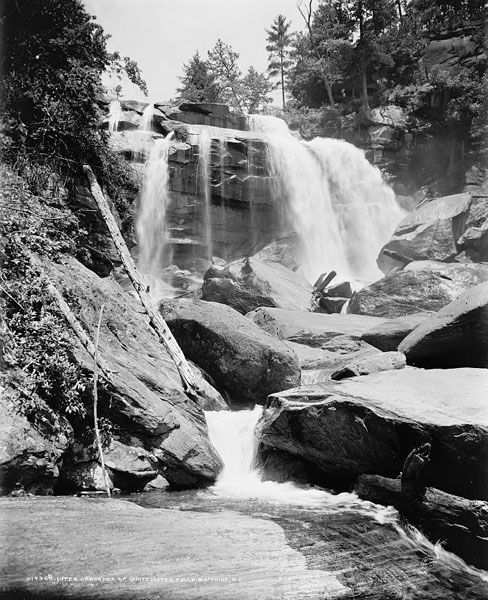
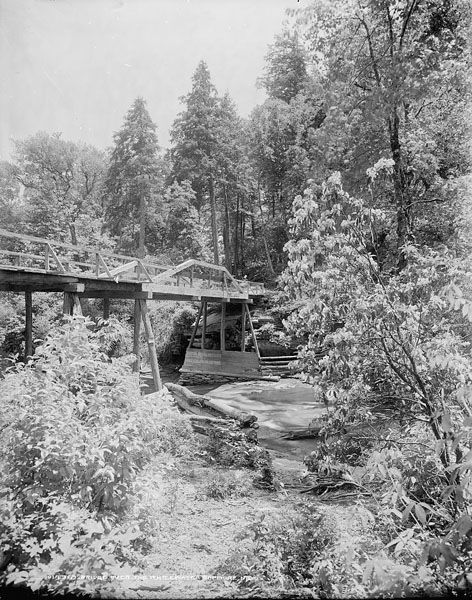
Lindsey, Thomas H. (ca. 1831 – unknown)
Active in the Asheville region from the late 1880s to the 1910s, Lindsey’s images were reproduced in publications of the time. Lindsey partnered with Edward E. Brown for a brief period.66
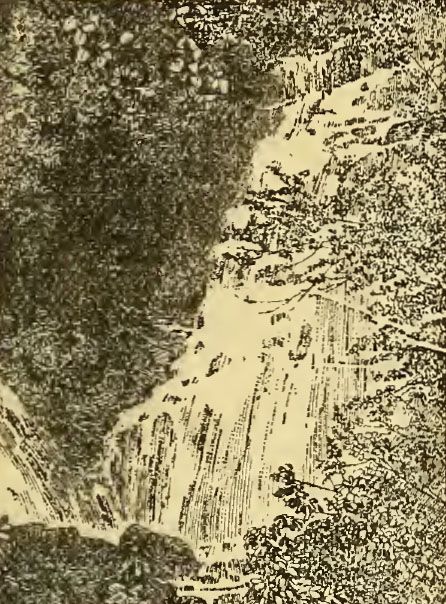
Photo illustration of Soco Falls from Lindsey's Guide Book to Western North Carolina, 1890, by Thomas H. Lindsey. (14-03-01)
Masa, George (1885 – 1933)
Western North Carolina’s most renowned photographer, Japanese native Masa (Masahara Iizuka, Shoji Endo) actively photographed in the region in the 1920s and early 1930s. A close friend of Horace Kephart, Masa’s photographs of the Smokies, along with Kephart’s writing, were significantly responsible for garnering support for the creation of Great Smoky Mountains National Park. In a 2011 speech, President Barack Obama said Masa and Kephart were “ordinary Americans who devoted their lives to protecting the land they loved.”
You can find Masa’s photographs in all kinds of publications, old and new, sometimes incorrectly attributed. Dozens of them are displayed on this website, hopefully with the correct citations. By far, the best resource I’ve found for viewing and researching Masa’s photography is Angelyn Whitmeyer’s George Masa Photograph Database. The level of research and meticulous detail that Whitmeyer devoted to this project is impressive. And the best part is that her research is available free for everyone.
For a captivating read about Masa, I highly recommend the exceptional biography George Masa, A Life Reimagined, by Janet McCue and Paul Bonesteel.77
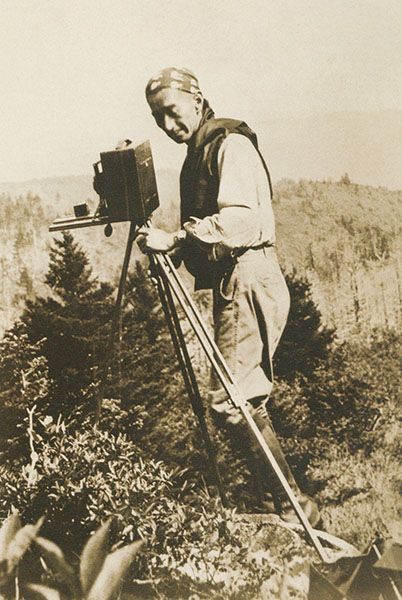
George Masa working with view camera at Shining Rock in Pisgah National Forest. (M004)
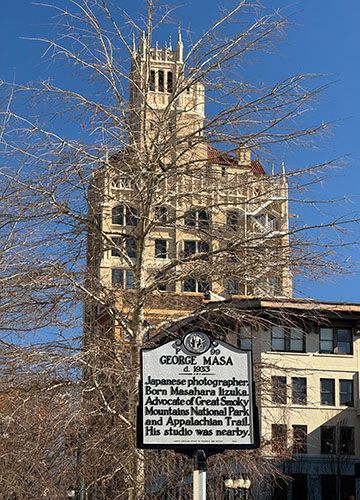
Historical highway marker for George Masa, located in downtown Asheville. (258287)
Morgan, Rufus (1846 – 1880)
Morgan photographed in western North Carolina during 1870s and is known for his stereographic images. He quit photography and moved to San Diego to operate an apiary. He died in 1880 from eating poisonous mushrooms.67 Morgan’s brother was Alfred Morgan, father of Albert Rufus Morgan, for whom Rufus Morgan Falls is named. I assume that Albert’s middle name honors his deceased uncle. Morgan’s daughter was renowned photographer Bayard Wootten, who is also listed on this page.
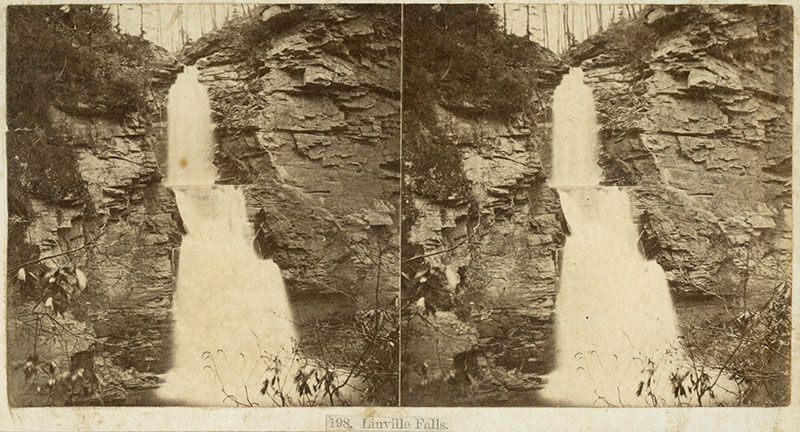
Stereographic view of Linville Falls by Rufus Morgan. (064A-07)
Morrison, Mark (1952 – )
Morrison began photographing North Carolina waterfalls in 1989 when he began work on his first waterfall guidebook, which he published in 1992. Still going strong, he published his latest book in 2021, the second edition of Waterfall Walks and Drives in the Great Smoky Mountains and the Western Carolinas.
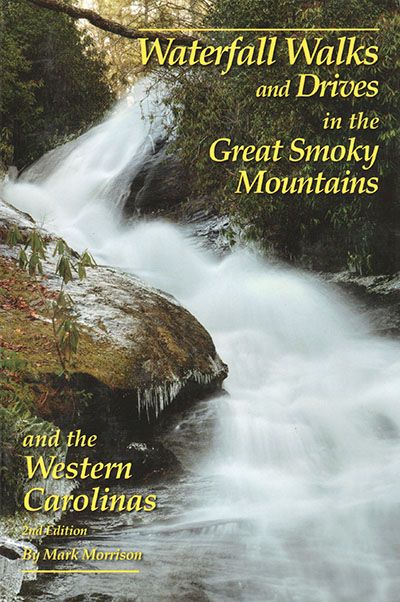
Mark Morrison's latest waterfall book featuring Slick Stick Falls, which he calls Lower Little Creek Falls, on the cover.
Morton, Hugh (1921 – 2006)
Everyone knows Morton as the owner and developer of Grandfather Mountain, but most people who visit the mountain don’t know that he was the most accomplished photographer in the state during his six decades behind the camera. He photographed all aspects of North Carolina, literally from the mountains to the sea, including sports, current events, nature, and public figures. During World War II, he was a combat newsreel photographer. While waterfalls weren’t a primary subject for Morton, they certainly are a part of his photographic legacy.
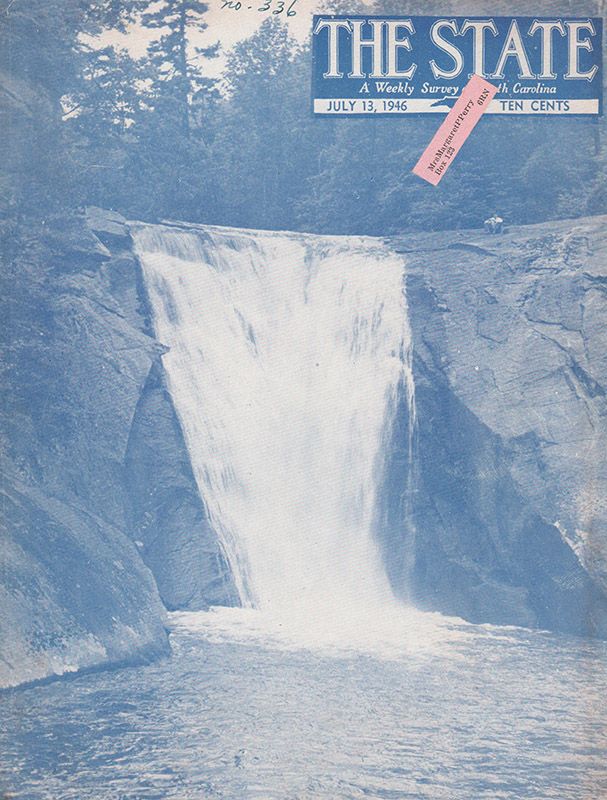
Photo of Elk Falls by Hugh Morton, on the cover of The State, July 13, 1946. (033A-01)
Pelton, Herbert W. (1879 – 1961)
Active in the Asheville region from 1905 until the late 1930s, Pelton is known for his panoramic views made with a Cirkut camera, although I’m not aware that he photographed any waterfalls using a panoramic composition.65
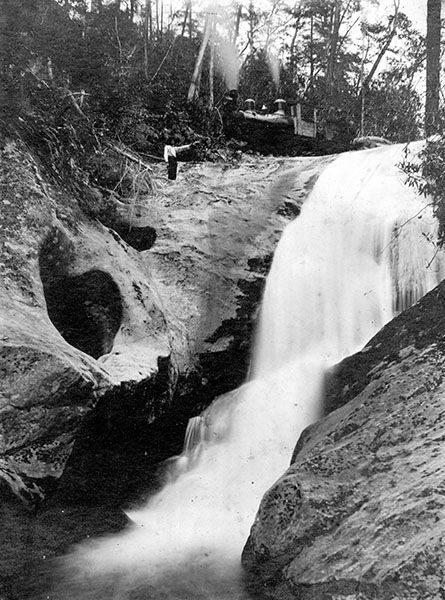
Herbert W. Pelton photo of Bard Falls showing logging train. (039Z15-then-01)
Roberston, William Thomas
See “Photographer’s Puzzle” at bottom of page.
Scadin, R. Henry (1861 – 1923)
Among the more well known early photographers in western North Carolina, Scadin photographed the region from the late 1880s to 1920. Of all the historical photographers who captured North Carolina’s waterfalls, only George Masa eclipses Scadin in influencing my work. Ramsey Library at UNC Asheville holds a large amount of Scadin’s work in the R. Henry Scadin Collection.
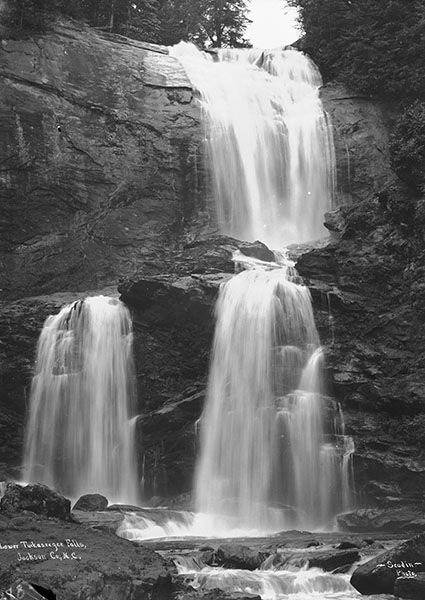
R. Henry Scadin photo of High Falls on West Fork Tuckasegee River. (099G-then_01)
Stevenson, Rich (1956 – )
A.K.A. “Waterfall Rich,” Stevenson is well known among waterfallers as the man behind the original NCWaterfalls.com website, which he began in 1998. He started photographing waterfalls that year but says he doesn’t have anything saved from those early days. Stevenson is still going strong, but today devotes his photography efforts to having fun instead of maintaining the website. That’s my job, now!
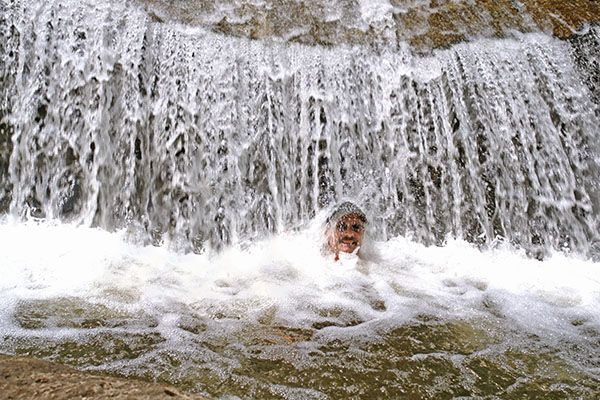
Rich Stevenson immersing himself into North Carolina waterfalling.
Tinsley, Jim Bob (1921 – 2004)
An article in a 2004 edition of The Transylvania Times described Tinsley as “a writer, photographer, musician, educator, historian and aficionado of cowboy culture and all things western.” A Transylvania County treasure, he is most known among waterfallers as the author and photographer of The Land of Waterfalls, Transylvania County, North Carolina, published in 1988. Tinsley’s meticulous research is responsible for many of the historical tidbits you see today in guidebooks covering Transylvania waterfalls, including mine.
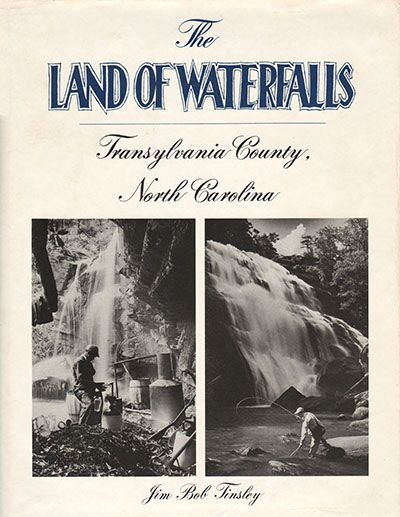
Jim Bob Tinsley is well known for his book about Transylvania County waterfalls.
Valentine, James (1942? – 2021)
Valentine “was a poet, master photographer, artist, naturalist, explorer, educator, filmmaker, and wild lands advocate. Considered one of the most extraordinary photographers in the South, Jim dedicated his life to preserving and celebrating the Earth’s wild lands through his fine art photography. He leaves so much of his spirit behind in his many books and photographs of the wild places he loved.”117
In 1979, Valentine published North Carolina, a large-format coffee-table book featuring photographs from across the state, including fourteen waterfall images. To my knowledge, it’s the first book of its type published about North Carolina.
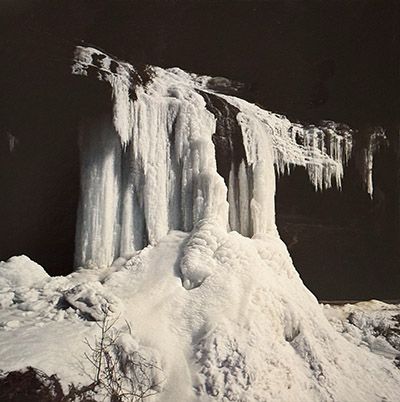
This image from James Valentine's coffee table book on North Carolina depicts Bridal Veil Falls in Cullasaja River Gorge during the record freeze of 1977. (025C-26)
Wootten, Bayard (1875 – 1959)
North Carolina’s most renowned female photographer, Wootten photographed a wide variety of subjects across the state from 1905 into the 1950s. She is believed to be the first woman to photograph from an airplane in the state (one account says the first in America) and is reported to have designed the original Pepsi-Cola logo. She was the daughter of Rufus Morgan, also listed on this page.115, 116
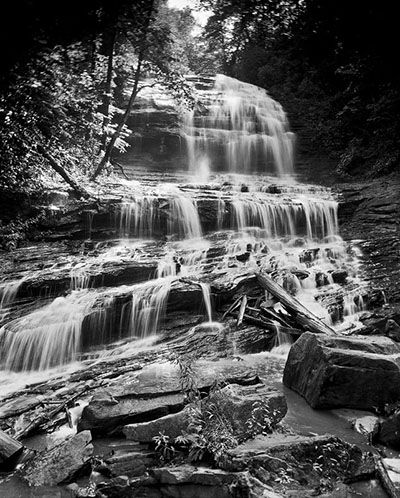
Bayard Wootten photo of Pearsons Falls. (076A-01)
Photographer’s Puzzle
I found several stereographic views of Bridal Veil Falls (Little River) and Connestee Falls, and one view of Triple Falls, from Pack Memorial Library in Asheville. They are all similar in age, style, and handwriting on the captions for some of them. But they are attributed to three different photographers.
William Thomas Robertson (1845 – 1895) was active in Asheville from 1872 to 1885.118 John S. Broadaway (ca. 1838 – 1891) worked in the foothills of NC and Greenville, SC, in the 1870s and early 1880s.119 I can find no information for the third attribution, Wheeler’s Art Gallery in Greenville, SC.
I suspect the photos attributed to Wheeler’s were made by Robertson or Broadaway, but that’s just a guess based on the fact that if Wheeler’s was a gallery not run by a photographer, the business would have to get its inventory from other photographers. And the fact that Wheeler’s is not listed in the comprehensive Photographers in North Carolina, The First Century, 1842-1941. I also wonder about the photos attributed to Broadaway and Roberston. Could they all have been made by one of them and somehow gotten misidentified at some point? If that’s the case, I suspect that Robertson is the photographer given that there is more of a record of his photography in western NC and the fact that he operated a gallery in Asheville.
Another curious tie-in is that Roberston purchased the photographic negatives from Rufus Morgan in 1876 when Morgan moved to California.118 I can’t help but wonder if some of the photos attributed to Robertson were actually made by Morgan, although I could not find any evidence form searching Morgan’s photos.
Okay, dear reader, you have your assignment.
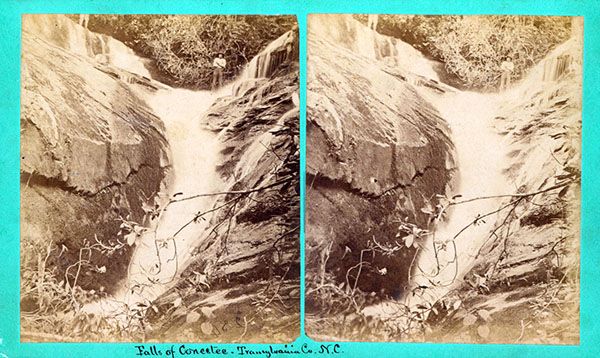
This stereograph of Silver Slip (where Batson Creek Falls joins Connestee Falls) has "Wheeler's Art Gallery Greenville SC" stamped on the back. (021AB-01)
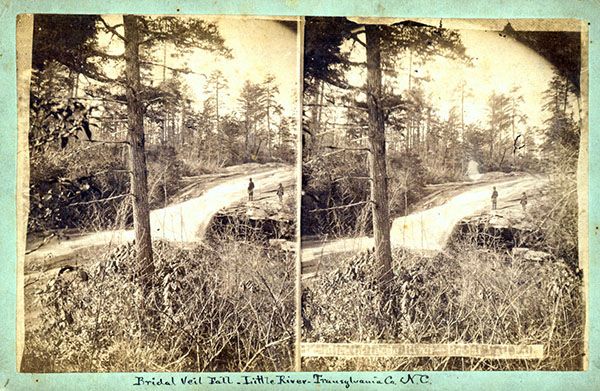
This stereograph of Bridal Veil Falls on Little River is attributed to William Thomas Robertson. (030D-03)
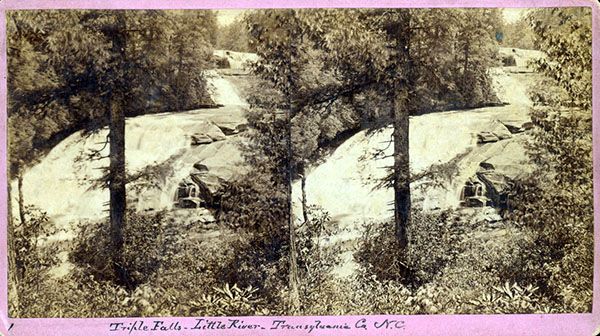
This stereograph of Triple Falls is attributed to John S. Broadaway. (030B-02)